

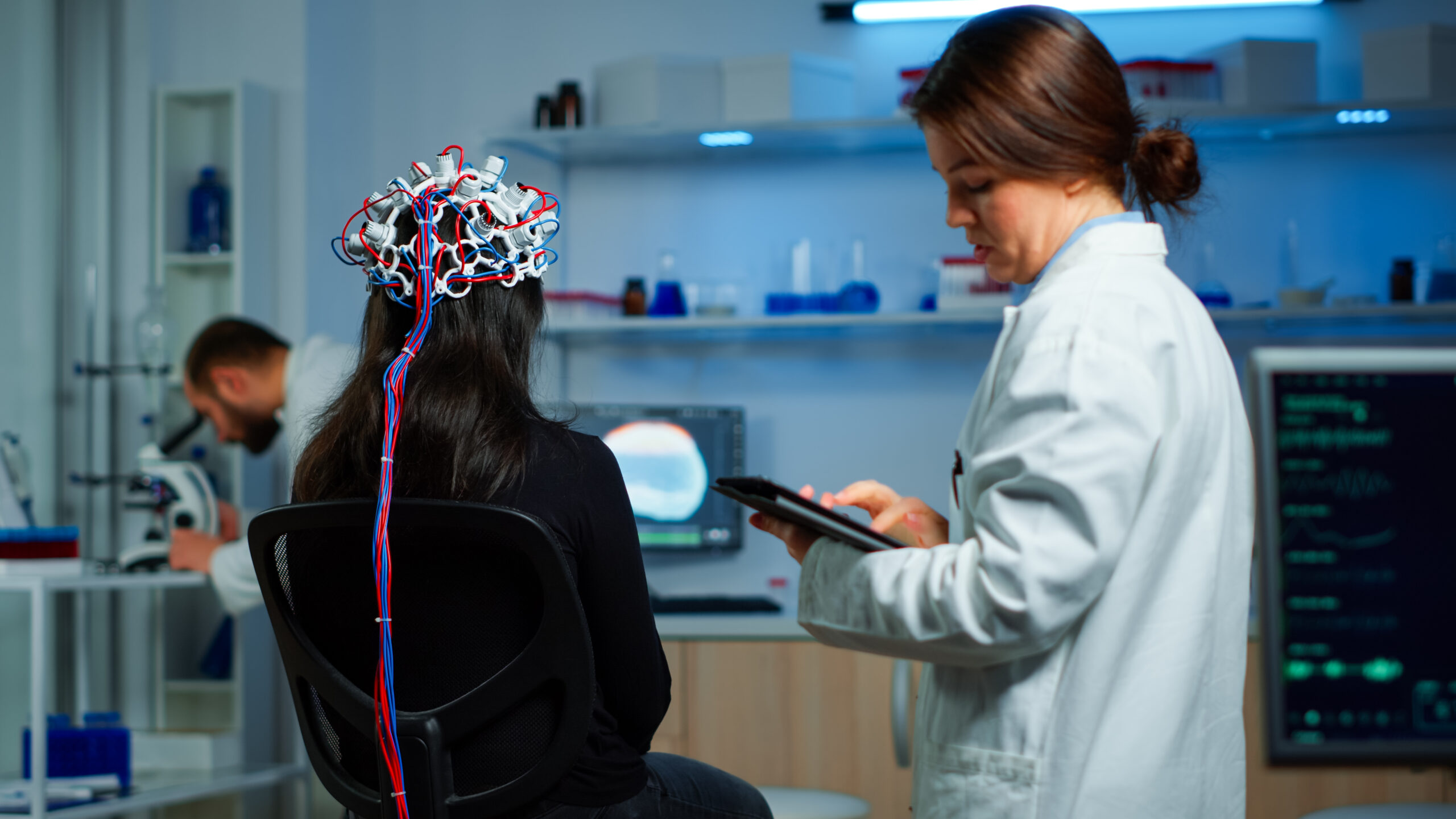
Medical School is integrating artificial intelligence into the curriculum to train the next gen of doctors.
The field of medical education is transforming and artificial intelligence (AI) is right at the heart of it. Gone are the days when medical students were confined to massive textbooks, endless lectures, and late-night cramming. Today’s med student has easy access to a new kind of companion: intelligent, responsive, and relentlessly available AI tools like ChatGPT, Gemini, UpToDate, AMBOSS, Glass.ai, to name a few.
But what does this really mean for the next generation of doctors? Are we looking at smarter students or just more distracted ones? Let’s break down how AI is not just a supplement but a revolution in the making for medical education.
Why Does AI in Medical School Matter?
The field of medicine is experiencing groundbreaking discoveries in genetics, revolutionary surgical techniques and now AI systems that have the ability to revolutionize the way medical students learn. This amazing technique has generated a lot of excitement in medical education and redefined how we practice medicine. For medical schools and aspiring doctors, understanding the importance of AI isn’t optional, it has become essential.
The integration of AI into medical education can enhance learning in numerous ways. AI provides a way to filter, synthesize, and personalize information, allowing students to focus on clinical reasoning, judgment, and patient care rather than just memorization. It’s not about replacing doctors; it’s about augmenting them with tools that make them faster, smarter, and more empathetic.
ChatGPT and other generative AI models are providing instant access to vast amounts of knowledge, real-time solutions and empower students to move beyond rote memorization.
How Medical Schools are Embracing AI?
Curriculum Integration
Top-tier medical schools have already integrated AI modules into their curriculum covering everything from AI ethics to machine learning in diagnostics.
AI in Clinical Skills Training
Virtual patients and AI-assisted simulations are used to develop diagnostic skills, practice surgical techniques, and simulate emergency scenarios.
Research & Data Science Tracks
More schools now offer MD-AI research pathways, allowing students to co-author studies involving clinical data mining, AI diagnostics, and predictive modeling.
AI Tools: The Medical Student’s New Study Partner
AI tools like OpenAI’s ChatGPT have quickly become the most talked-about AI tools in education, and for good reason.
ChatGPT
- Instant Clarification
Medical students are required to memorize a large amount of information in a very short period of time. With ChatGPT, students can quickly access easy to digest information, enabling them to better understand intricate medical concepts. ChatGPT can explain complex topics like cardiac physiology or pharmacokinetics in simpler terms or in whatever format you choose such as bullets, analogies, diagrams. No more flipping between five textbooks just to understand one mechanism.
- Practice Questions & Mock Exams
You can prompt ChatGPT and other AI tools to generate USMLE-style practice questions with detailed explanations. Better yet, you can tweak the difficulty or focus on a particular topic you’re struggling with.
- Simulated Patient Interviews
Using prompts, you can role-play a doctor-patient encounter to practice taking histories or delivering difficult news, no standardized patient booking required.
- Condensed Study Notes
Ask it to summarize lengthy articles, guidelines, or lecture notes. Perfect for pre-rounding or reviewing before an OSCE.
- Informed Clinical Decisions
Taking timely and accurate clinical decisions is one of the biggest challenges medical students face. ChatGPT helps medical students receive real-time feedback on their decision making process, improving their critical thinking skills and enabling them to make effective clinical decisions.
Other Powerful AI Tools in Medical Education
AMBOSS
This amazing tool can integrate medical facts with interactive images and cross-linked learning cards. The AI-guided learning paths can adapt to your weaknesses.
UpToDate + DynaMed
These tools are AI-assisted literature search engines that can pull in the latest evidence and offer decision-support tools during clinical rounds.
Glass.ai
Glass.ai can extract and organize medical information from real clinical documentation. It trains students on clinical reasoning and case-based diagnostics.
Medical Scribes Powered by AI (Abridge, Suki)
Med students are learning how to use voice-to-text AI tools to improve efficiency in future practice. Understanding how documentation is evolving is critical.
Ethical Implications: What Students Need to Know
When using AI tools in medical education, students must be aware of a range of ethical implications to ensure responsible, respectful, and effective use. AI is a powerful tool, but it’s only as ethical, accurate, and unbiased as the people who use it.
There’s a risk of using AI for clinical reasoning, diagnostic support, or academic tasks. Use AI as a supplementary tool; relying solely on it for foundational learning, critical thinking, or clinical judgment is not recommended. Using AI to simulate patients or scenarios must be done ethically, especially when replicating real cases or people.
AI tools can generate convincing but factually incorrect information. Relying solely on AI without critical thinking is risky. Verify all AI-generated content against peer-reviewed sources, textbooks, or with instructors.
Submitting AI-generated content as your own may violate academic integrity policies. Disclose the use of AI where required, and understand your institution’s guidelines on its use in coursework or exams.
The Future of AI for Aspiring Doctors
Many Caribbean medical schools have integrated AI and cutting-edge tools into the curriculum, ensuring their students are prepared for an AI-powered future. Medical students today aren’t just memorizing pathways, they’re learning to interpret data, evaluate algorithms, and understand predictive models.
From understanding how to generate prompts for accurate results to critically assessing AI-generated outputs, students are now better trained to work smarter. These technologies deepen understanding and improve efficiency in many innovative ways, preparing highly skilled physicians. As the demand for tech-savvy doctors is growing, the ability to integrate AI into daily clinical practice can prepare medical graduates for competitive roles.
Are You Ready to Embrace the Shift?
AI is not a threat to medicine, it’s an invitation. An invitation to work smarter, think deeper, and care more fully. For medical students willing to embrace it, tools like ChatGPT offer a serious edge, not just on exams, but in becoming the kind of thoughtful, efficient, and adaptive physician the 21st century demands. Start using AI tools early to build familiarity and use AI as a supplement, not a substitute. Stay updated on AI ethics and limitations and consider exploring AI-related electives or research projects.
 Helinika Staff