

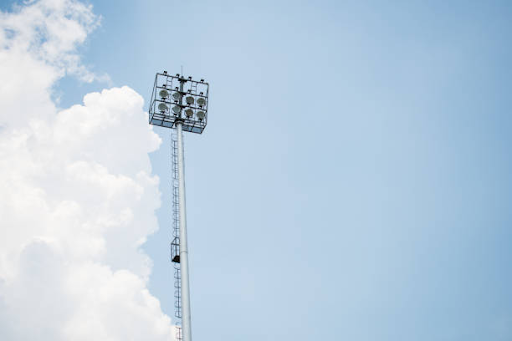
For large-scale airports, logistics hubs, and industrial parks, the illumination of a certain area is never an afterthought – it is rather a prerequisite as part of operational safety standards. Such facilities require broad and deep lighting coverage to enable round-the-clock operations, maintaining safety visibility, and supporting dynamic changes in weather and environmental factors. One of the most reliable lighting options in these cases is high mast lighting which is greatly dependent on the light pole design and their construction.
Selecting a high mast light pole requires more than just an option considered the tallest or strongest. The examination of the choice poles should also consider the structural requirements, wind load endurance, maintenance avenues, and materials used as decision factors. This makes it necessary to consult with experienced high mast pole manufacturers experts for any large-area lighting project.
Identifying the Functions of High Mast Poles in Critical Infrastructure
High mast poles form the base of the lighting system of expanse land spaces where traditional fittings cannot do justice. With a height between 20 and 60 meters, these poles can carry various heavy-duty floodlights and of construction.
High-security areas such as ports and airports operate under extreme weather conditions which are particularly difficult for lighting systems to manage. This also means that masts need to be able to:
- Maintain structural integrity at high wind speeds
- Facilitate maintenance at extreme heights
- House multiple Luminaires for optimal coverage
- Comply with a multitude of safety, environmental, and structural regulations.
Using a robust high mast pole will drastically decrease maintenance and fueling costs while giving the desired lighting control.
Choosing The Right High-Mast Light Pole: Focus Points
When looking to implement a high mast lighting system project teams need to assess a range of technical and environmental components. These include:
Corrosion Resistance and Material
Terminals, especially port based ones, are exposed to high levels of corrosive elements which can damage infrastructure. Specialized galvanizing or anti-corrosive coverings on steel poles greatly aid. Many high mast pole fabricators offer finishes and materials that can be adjusted to suit specific regions and environmental challenges.
Pole Height and Load-Bearing Capacity
The height of the pole needs to be adjusted for optimal light distribution and intensity. Taller poles cover larger areas, but they have to be designed to withstand additional wind and weight. The type and number of luminaires also influence the load calculations. Structural integrity is critical, and all installations should be professionally engineered.
Headframe Design and Mounting Options
The design of a headframe, whether fixed or mobile, determines the performance and ease of maintenance. Fixed systems are inexpensive, but they require aerial access for servicing. Mobile systems, which use pulley mechanisms to lower the luminaires to the ground, are more maintenance friendly, especially in high foot traffic areas or high-security zones such as airports.
Foundation and Soil Conditions
A pole’s strength is a reflection of its primary support, and in this case, the soil forms the base. The ground’s ability to support the pole must be determined through soil tests in areas of weak soil or where seismic activity is experienced. These may require reinforced foundations or deeper footings.
Compliance with Wind Speeds in Your Region
Both regional and international safety policies put emphasis on the capability of lighting systems to withstand certain wind loads in cyclone or high elevation areas. This means the best high mast pole manufacturers have to comply with the building standards of the region which necessitate them to carry out simulations for testing wind load resistance.
Smart Features and Flexibility in Design in Modern High Mast Lighting Systems
Infrastructure development projects today require high-tech solutions that are beyond just providing light. Advanced features for smart control, environmental monitoring, and other energy preserving technologies are standard attributes of modern high mast systems.
Automatic Control of Lighting
With advanced systems, facility managers can control light levels from their comfort zone or pre program them, and even place motion sensors that will switch on the lights when movement is detected. These options reduce energy costs associated with powering the fixtures and enhances the life of the lighting instruments.
Renewable Resource Adaption
The use of solar panels and even hybrid systems is on the rise when it comes to high mast lighting systems. This greatly helps in remote regions or places looking to lessen methane emissions where solar panels are used since they’re not dependent on a local electricity grid.
Emergency and Safety Systems
For critical places such as airports, emergency lighting and backup power systems need to be fitted. Some high mast poles are able to support communication antennas, enabling multifunctional capabilities like security cameras and weather stations.
A proficient high mast pole manufacturer is capable of offering custom designs that incorporate new technology features without compromising structural functionality or ease of operation.
Diverse Uses Around Airports, Ports, and Industrial Facilities
The multifunctional value of high mast lighting systems spans several industries. We will discuss the impact of optimal pole design on different case scenarios:
Container Yards and Ports
Ports operate 24/7 and require seamless lighting to prevent accidents while loading and unloading goods. Corrosion resistant poles with mobile head frames are best suited here. Lights have to endure exposure to salty air, humidity and heavy duty vehicle traffic.
Runways and Airports
Airports require homogeneous, glare-free lighting across taxiways, apron, and perimeter zone areas. High mast poles have to make possible accurate aiming of lights and air traffic control systems interfaces. Non Disputable requirements are aviation safety standards.
Industrial and Logistics Parks
In perimeter industrial or warehouse logistics hubs, lighting enhances workforce productivity, mitigates risks, and ensures safety. Pole designs need to include provisions for maintenance, energy efficiency, and LED integration. Smart lighting technologies allow operators to manage individual zones and cut energy waste.
Terminal Parking and Transit Areas
Locations with high pedestrian and vehicular traffic require the use of high-intensity lights for their safety as well as the safety of others. High mast poles are able to accommodate EV chargers, surveillance cameras, or public announcement systems as per local requirements.
Collaborating With Experienced High Mast Pole Suppliers
Consulting with specialized high mast pole manufacturers guarantees project success with the high range of technical variables setting the scope of your lighting project. When looking for suppliers, evaluate them on the following points:
- Established industry experience: Working with projects of similar scale and scope within your industry.
- Ability to provide customization: Flexibility to change pole height, materials, and other features.
- Quality assurance guarantee: Attainment of ISO certification and compliance to local laws on construction.
- Support after installation: Provision of the support contract for servicing and replacement parts.
- Compliance to sustainable development practices: Environmentally sound methods of producing poles utilized.
Vertical integration of high mast lighting and infrastructures leads to efficiency of operations, and selecting the right competitor for servicing these needs provides compliance to regulatory requirements.
Conclusion
Installing high mast lighting systems into large area applications like ports, airports and industrial parks requires both building engineering and high tech lighting to work in harmony. The most critical elements are often overlooked, poles support the luminaires and they are the primary safety factors for long term durability and efficiency.
Working with experienced high mast pole manufacturers offers the benefit of customized environmentally considerate solutions built for the lighting objectives and holomorphic integrations for the years to come. During the reign of smart infrastructure, precision cannot be made during the selection of the light, it has to do with endurance, flexibility to future challenges as well as adaptations to the automated industrial world.
 Lesa Smith