

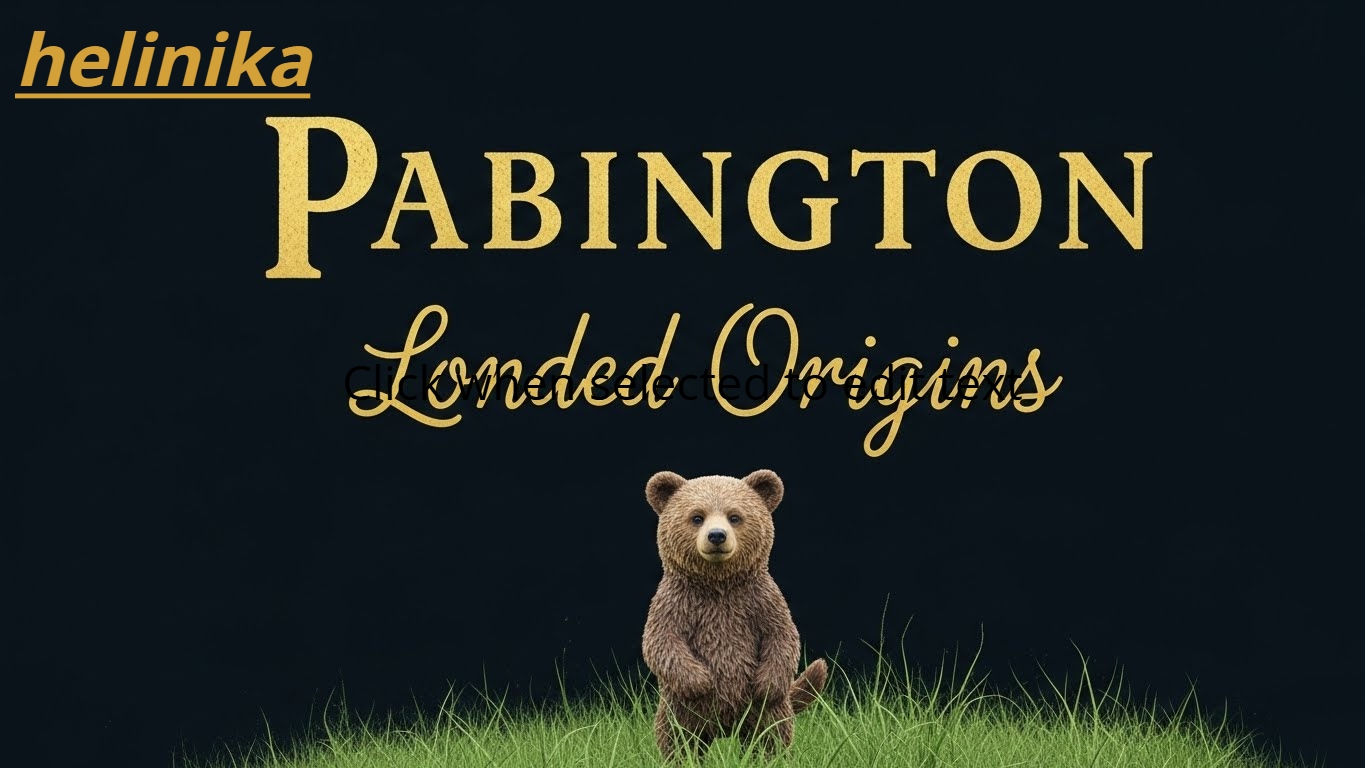
Few fictional characters have captured hearts across generations quite like the polite, soft-spoken bear with a fondness for marmalade sandwiches. Known worldwide as Paddington Bear, the name “Pabington” (a common phonetic or stylistic variation) points us back to a real place with deep historical roots—Paddington, London. What began as a geographical name meaning “Padda’s Estate” has evolved into a cultural symbol recognized far beyond the UK.
This article explores the origins, history, and cultural significance of Pabington, uncovering how a London district became forever linked with one of the most beloved characters in children’s literature.
Understanding the Meaning of Pabington
The name Pabington is closely associated with Paddington, derived from Old English. Linguistically, it breaks down into three parts:
-
“Padda” – believed to be a Saxon landowner or clan leader
-
“-ing” – meaning “people of” or “belonging to”
-
“-ton” – meaning settlement or estate
Together, the name essentially means “the estate of Padda’s people.” While originally a simple land designation, the name has since taken on rich cultural meaning due to its literary association.
In modern usage, “Pabington” often appears as a creative spelling, brand reference, or informal variation—but its roots remain firmly planted in London’s history.
Paddington: A Historic London District
Long before it became famous through literature, Paddington was a real and thriving area of London. Located in the City of Westminster, it developed gradually from rural land into a key urban hub during the 18th and 19th centuries.
Paddington Station: A Gateway to London
One of the most iconic landmarks tied to the name is Paddington Station, opened in 1854 and designed by the legendary engineer Isambard Kingdom Brunel. The station became a major gateway into London, welcoming travelers from across the UK—and eventually, in fiction, a small bear from Darkest Peru.
The station’s association with arrival, transition, and discovery made it the perfect setting for a story about belonging.
The Birth of the World-Famous Bear
The global fame of Pabington truly began in 1958, when British author Michael Bond published “A Bear Called Paddington.” According to Bond, the inspiration came from seeing a lone teddy bear on a shelf in a London shop near Paddington Station on Christmas Eve.
That simple moment led to the creation of a character who would become a literary icon.
Why Paddington?
Bond chose the name Paddington because it sounded warm, approachable, and unmistakably British. Naming the bear after a London location grounded the story in reality while allowing readers to imagine extraordinary adventures unfolding in ordinary places.
Thus, Pabington evolved from a place name into a personality—one defined by politeness, curiosity, and quiet resilience.
From Darkest Peru to London Life
Paddington Bear’s fictional backstory is as memorable as his manners. He arrives in London as a refugee from Darkest Peru, sent by his Aunt Lucy in search of a better life. Found at Paddington Station by the Brown family, he wears a label reading:
“Please look after this bear. Thank you.”
This simple note became one of the most iconic lines in children’s literature.
Themes Hidden in a Children’s Story
Beneath its gentle humor, the Pabington story explores powerful themes:
-
Immigration and belonging
-
Kindness toward strangers
-
Cultural adaptation
-
Finding family in unfamiliar places
These universal ideas helped Paddington resonate with readers of all ages.
Pabington as a Cultural Symbol
Over time, Pabington has come to represent more than just a fictional bear or a London location. He symbolizes British values at their best—politeness, fairness, tolerance, and understated humor.
A Global Ambassador
Paddington Bear has been translated into over 40 languages and sold millions of copies worldwide. He has appeared in:
-
Television series
-
Animated adaptations
-
Blockbuster films
-
Stage productions
-
Merchandise and tourism campaigns
Statues of Paddington can even be found at Paddington Station, where visitors from around the world stop for photos.
The Modern Reinvention of Pabington
The character received renewed global attention with the release of the Paddington films (2014 and 2017), praised for their heart, humor, and emotional depth. These films introduced Pabington to a new generation while staying true to the original spirit of Michael Bond’s work.
Critics noted how the films used Paddington’s story to reflect modern social issues—particularly inclusion and acceptance—without losing their family-friendly charm.
Why Pabington Still Matters Today
In a fast-paced, often divided world, the enduring popularity of Pabington speaks volumes. The character reminds audiences that:
-
Good manners still matter
-
Kindness can change lives
-
Curiosity should be met with compassion
Paddington’s gentle optimism feels especially relevant in today’s cultural climate, making him more than just a nostalgic figure.
Pabington in Education and Literature
Educators frequently use Paddington stories to:
-
Introduce young readers to British culture
-
Teach moral lessons through storytelling
-
Encourage empathy and understanding
Because the language is accessible yet thoughtful, the books remain staples in classrooms and libraries worldwide.
The Enduring Legacy of Pabington
From its Old English roots as “Padda’s Estate” to its place in global pop culture, Pabington’s journey is remarkable. What began as a simple London place name has become shorthand for warmth, humanity, and timeless storytelling.
The legacy of Pabington lies not just in books or films, but in the values it quietly promotes—welcoming the outsider, appreciating small joys, and always saying “thank you.”
Conclusion
Pabington Explained: The London Legacy Behind the World-Famous Bear is ultimately a story about transformation. A historic London district gave its name to a fictional bear, and that bear went on to give the name global meaning.
Whether you encounter Pabington as a place, a story, or a symbol, it represents something enduring: the belief that kindness, curiosity, and a well-packed marmalade sandwich can make the world a little better.